
The worst advice about top AI models is to pick the one sitting highest on a leaderboard and call it the best. In production, that shortcut breaks fast. The better question is which model fits the workload across reasoning quality, latency, token economics, safety, tool use, context demands, and operational reliability, because the practical winner is often the one that causes fewer retries, fewer surprise bills, and fewer deployment headaches.
That matters more now that frontier models are clustered tightly enough that small score gaps don't tell the whole story. Stanford's 2026 AI Index shows the frontier is concentrated in a narrow top tier, with several vendors sitting close together on the Arena Elo scale, and it also notes that competitive pressure has shifted toward cost, reliability, and domain-specific performance rather than a single headline rank (Stanford AI Index technical performance summary). The seven models below reflect that reality. Check current pricing, preview labels, availability, and exact SKUs before you ship anything, because those details move quickly. If you want to test multiple provider-prefixed models through one OpenAI-compatible endpoint, Openbase's model gateway can simplify side-by-side evaluation with failover and per-call visibility into tokens, latency, provider, and cost.
Table of Contents
- 1. OpenAI GPT-4o
- 2. OpenAI GPT-4o mini
- 3. Anthropic Claude Sonnet 5
- 4. Google Gemini 3.1 Pro Preview
- 5. xAI Grok-4.7
- 6. DeepSeek R1
- 7. DeepSeek V3 / V3.1
- Top 7 AI Models Comparison
- Choose by Constraint, Then Validate in Production
1. OpenAI GPT-4o
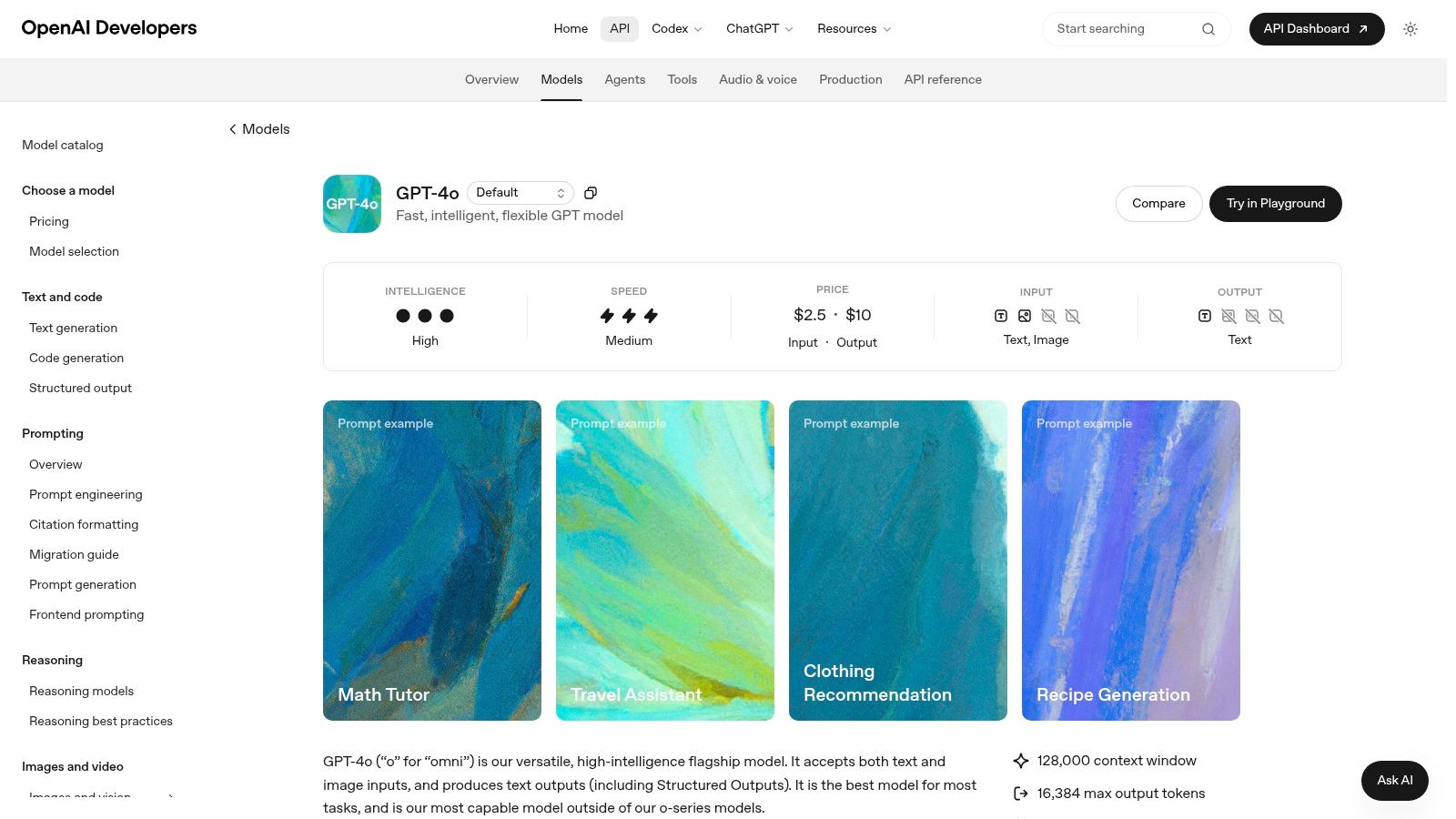
OpenAI's GPT-4o is the safest general-purpose pick when your product needs text, images, streaming, tool calling, and low-latency interaction in one place. The model's appeal isn't that it wins every benchmark, it's that it behaves like a dependable default for assistants, RAG flows, and agentic systems where the integration surface matters as much as raw output quality. Its API documentation emphasizes multimodal support, tool and function calling, streaming, and real-time use cases on the product page itself (GPT-4o model docs).
Why it fits production defaults
GPT-4o makes sense when teams want one model to cover a broad share of user-facing work without forcing every request through special-case routing. The model's ecosystem is mature, the docs are extensive, and the tool-use path is familiar for teams already building on OpenAI APIs. That lowers integration risk, which is often more valuable than squeezing the last bit of benchmark performance out of a harder-to-operate model.
Practical rule: if you need one model that product, platform, and support teams can all live with, start with GPT-4o and measure where it fails before you optimize away from it.
The tradeoff is cost. GPT-4o is not the cheapest option in this list, so it's better for workloads where quality and reliability justify the spend. It's also worth checking modality-specific behavior, because audio and other endpoints can live under different API paths and pricing structures than plain text. For teams already experimenting with multi-provider routing, GPT-4o is a strong benchmark anchor because it gives you a clear baseline for latency, tool behavior, and failure modes.
2. OpenAI GPT-4o mini
GPT-4o mini is the model you reach for when the product has to handle high volume, tight budgets, and predictable latency. It keeps enough of the GPT-4o family's multimodal utility to stay useful in mainstream apps, but its real value is operational. You can run more traffic through it without making every request feel expensive, which is exactly what you want for support bots, classification steps, and lighter assistant workloads.
The public launch note describes it as a cost-efficient model designed for lower latency at scale, with support for text and image input, Chat Completions, Batch, automatic prompt caching on eligible calls, and instruction-hierarchy training aimed at better jailbreak resistance (GPT-4o mini announcement).
Where the smaller model wins
In production, smaller often means easier to deploy. GPT-4o mini is a better fit for workflows where you care more about consistency and bill control than about the absolute hardest reasoning edge cases. It also works well as a first-pass model in a routing setup, where you reserve larger models for escalation only when the request is ambiguous or high-stakes.
- Volume-heavy support: use it for triage, summarization, and response drafting where latency and spend matter.
- Multi-step fallback: use it as the cheaper first attempt before escalating to a larger model.
- A/B testing: compare it directly with GPT-4o on the same prompts to see where quality loss is acceptable.
GPT-4o mini is not the right answer for the hardest long-form reasoning or coding tasks, and that limitation matters if your app depends on deep synthesis. But for mainstream production work, its price-performance profile makes it one of the most practical top AI models to benchmark early. If your team is standardizing on a gateway layer, it's also a good test case for seeing how much spend you save when you route ordinary traffic away from larger models.
3. Anthropic Claude Sonnet 5
Claude Sonnet 5 is strongest when the job is less about a single answer and more about planning, tool use, coding, and multi-step execution. That makes it a good fit for agentic workflows where the model needs to stay on task, handle intermediate steps, and recover from misfires without much hand-holding. Anthropic's launch material ties the release to coding and tool-use improvements, and its system card and safety disclosures give teams something concrete to review before deployment (Claude Sonnet 5 announcement).
Why teams pick it for agentic work
Claude Sonnet 5 stands out when the workflow depends on tool selection, structured execution, and repeated back-and-forth with external systems. That matters for coding assistants, computer-use agents, and enterprise automations, where a weak first pass can cost time downstream. Its safety posture also matters in procurement, because many teams evaluate that alongside output quality rather than treating it as a separate concern.
Deployment insight: for agentic systems, the model that keeps the workflow on rails often matters more than the model that sounds most confident.
The tradeoff is ceiling, not utility. Anthropic's own positioning leaves room for larger families to outperform on the hardest tasks, and that is the right way to read Sonnet. It is a strong middle path, not a winner across every benchmark category. That middle path is often what product teams need, because the model has to be good enough, safe enough, and predictable enough to run a real workflow without constant intervention.
Teams comparing providers through a unified layer such as Openbase's model testing and observability guide can also check tool-call reliability, failover behavior, and billing visibility in one place.
4. Google Gemini 3.1 Pro Preview
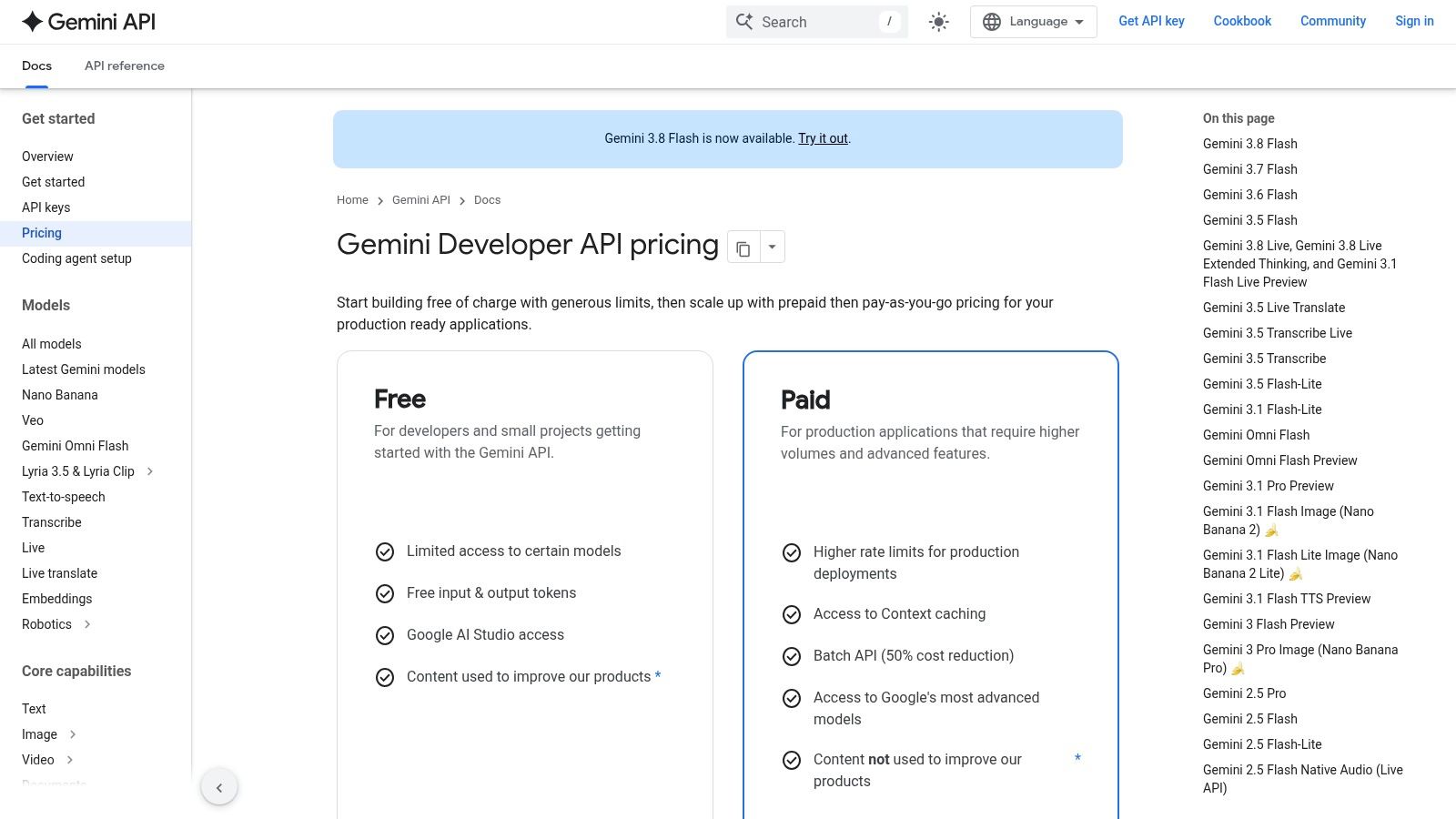
Gemini 3.1 Pro Preview fits teams that already run on Google Cloud or need multimodal breadth plus multiple pricing tiers. Google's developer pricing docs cover text, image, video, and audio support, along with batch discounts and integration paths through Google AI Studio and Vertex AI (Gemini API pricing). That matters more than a small quality gap if identity, data, and deployment controls already sit inside Google services.
The deployment advantage is ecosystem fit
Gemini's strongest case is operational convenience. If your team already uses Vertex AI, the model fits existing security, billing, and deployment patterns without much friction. For teams comparing providers through a unified gateway, Openbase's model catalog and testing docs can make it easier to compare Gemini against other options before routing traffic.
The newer Live variants also keep Gemini relevant for voice-agent work where latency matters.
Preview status changes the decision. Exact model IDs and tier mappings need verification before deployment, because Google's SKUs evolve quickly and the name on a docs page does not always map cleanly to production behavior. That is a deployment warning, not a model critique. Fast-moving SKU surfaces create avoidable complexity, especially for teams that need stable billing and reproducible tests.
Gemini belongs near the top of a serious shortlist when Google Cloud integration is required. It becomes more useful if procurement needs a clear path for batch pricing, or if the product includes multimodal features that go beyond plain text. The model's value often comes from platform fit, not just benchmark position.
5. xAI Grok-4.7
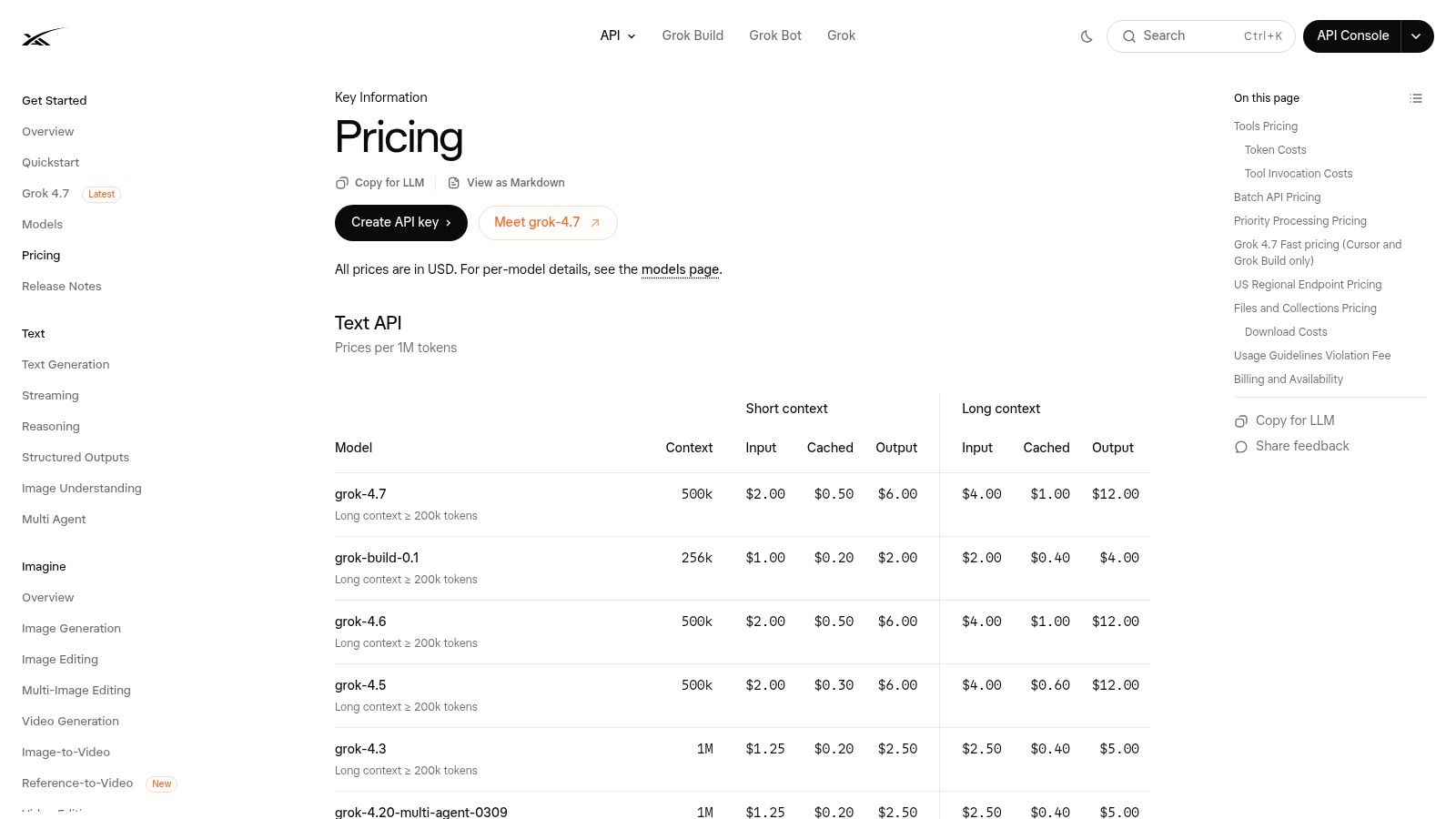
xAI Grok-4.7 is compelling for teams that need long context, web-enabled workflows, code execution, and explicit token accounting. The pricing page makes the economics unusually visible, including input, cached input, output, and reasoning tokens, which is useful when you're trying to calculate what a real workload will cost instead of guessing from a headline rate (xAI pricing docs).
Why token visibility matters
A lot of model selection advice ignores the way reasoning and caching alter the bill. Grok's pricing layout pushes the opposite direction, because it makes the request shape part of the cost conversation. That's useful for long-context analysis and agentic tools that have to chew through large documents, web material, or files while keeping spend understandable.
The model is also interesting for teams that need regional deployment controls. xAI documents an optional US regional endpoint with data-location guarantees, which can influence enterprise adoption even when the model itself isn't the only decision factor. As with the other frontier options here, preview status and exact pricing can vary by model and endpoint, so live verification matters before you commit a production route.
Grok makes the most sense when your application is built around browsing, retrieval, or code-assisted workflows that benefit from a large working context. It's less about chasing a universal top slot and more about picking a model whose visible economics and tooling match the shape of your application.
6. DeepSeek R1
DeepSeek R1 is the reasoning-first option for teams that care about structured derivation, math, science, and harder coding work. Its appeal is narrow but clear. It pushes the model toward more deliberate problem solving, which matters when a careful chain of reasoning is more valuable than a fast-sounding answer. The platform documentation describes reasoning-optimized controls, “thinking mode,” prompt caching, and deployment choices that can change over time (DeepSeek platform).
Use it for hard problems, not vanity benchmarks
R1 is attractive as a cost-performance option for reasoning-heavy workloads. That case depends on stable prompts that can benefit from caching and on teams willing to verify rate tables before rollout. DeepSeek's ecosystem has changed enough that the SKU surface needs review each time you plan a deployment.
The practical value shows up in production tasks. For math tutors, technical assistants, and constrained coding tools, a reasoning-first model can produce more useful downstream output than a general-purpose model that answers faster but less carefully. The test is simple: does R1 reduce human correction on your own tasks? If it does, it earns a place.
A multi-provider gateway can make that evaluation cleaner. You can compare R1 against a closed frontier model on the same prompts, then measure output quality, retries, latency, and cost per request instead of relying on benchmark claims alone. Openbase can also simplify testing, failover, usage visibility, and billing across providers, which helps teams see whether R1's reasoning style fits the product better than a higher-profile alternative.
7. DeepSeek V3 / V3.1
DeepSeek V3 and V3.1 are strongest when deployment cost matters as much as output quality. For teams that need a capable general-purpose model without paying frontier-model rates on every request, they are worth testing early. V3.1's split between Think and Non-Think modes also gives product teams a way to choose between deeper reasoning and faster responses per request.
Why controllable reasoning changes the economics
That split matters because it lets you route work by task complexity instead of forcing one behavior across the whole product. Short support replies, extraction tasks, and routine coding prompts can stay in the lighter mode. Harder cases can move to the reasoning path only when the extra deliberation is justified.
The practical constraint is model drift. DeepSeek's naming, migration paths, and pricing can change enough that each deployment needs a fresh review before rollout. That makes V3 and V3.1 attractive for disciplined teams, but only if they verify current SKU details rather than relying on a stale demo setup. As noted earlier, the same platform page documents these deployment choices.
For many products, the best fit is as the default generalist inside a routing stack. Keep simpler prompts on V3 or V3.1, then escalate only when the request needs more deliberation or stricter output quality. That approach helps control spend, latency, and retry rates at the same time.
A unified gateway such as Openbase can make that comparison cleaner. It lets teams test DeepSeek against other providers on identical prompts, then compare output quality, latency, cost per request, failover behavior, and usage visibility before committing to one path.
Top 7 AI Models Comparison
| Model | 🔄 Implementation complexity | ⚡ Resource requirements | ⭐ Expected outcomes | 📊 Ideal use cases | 💡 Key advantages |
|---|---|---|---|---|---|
| OpenAI GPT-4o | Moderate; standard API patterns, tool/function setup | Higher per‑token cost; low‑latency infra recommended | ⭐ High general reasoning, coding, multimodal performance | Production assistants, RAG, agentic flows, multimodal apps | Mature ecosystem, robust tool calling and safety stack |
| OpenAI GPT-4o mini | Low; drop‑in for many GPT‑4o integrations | Low cost at scale; optimized for predictable spend | ⭐ Good mainstream reasoning and multimodal understanding (some tradeoffs) | High-volume production, cost-sensitive assistants | Excellent price/performance; prompt caching discounts |
| Anthropic Claude Sonnet 5 | Moderate; Claude API with planning/effort controls | Competitive pricing; enterprise rate limits available | ⭐ Strong planning, multi‑step execution and coding | Agentic flows, coding agents, enterprise deployments | Focused on safe agentic behavior and tool execution |
| Google Gemini 3.1 Pro (Preview) | Moderate–high; multiple SKUs and cloud integrations | Variable by tier; competitive in some pricing tiers | ⭐ High multimodal and tool‑enabled capabilities | Google Cloud apps, multimodal agents, low‑latency voice | Deep Google Cloud integrations and diverse pricing options |
| xAI Grok-4.7 | Moderate; manage long‑context and tool integrations | Competitive per‑token rates; special endpoints/variants possible | ⭐ Excellent long‑context reasoning and web/tool use | Web‑enabled agents, code execution, long‑context analysis | Very large context windows and pricing transparency |
| DeepSeek R1 | Moderate; reasoning‑mode controls and dynamic SKUs | Historically cost‑effective but pricing volatile | ⭐ Strong chain‑of‑thought reasoning for hard problems | Math/science problem solving, constrained coding workflows | Reasoning‑first decoding, aggressive caching to lower costs |
| DeepSeek V3 / V3.1 | Moderate; hybrid Think/Non‑Think inference modes | Low token costs; frequent model/sku updates | ⭐ Competitive general and coding quality with inference control | Assistants, data work, coding where cost/latency tradeoffs matter | Controllable inference modes and public technical reports |
Choose by Constraint, Then Validate in Production
The right selection flow is straightforward. Use GPT-4o for broad multimodal production needs, GPT-4o mini for high-volume efficiency, Claude Sonnet 5 for coding and agentic execution, Gemini 3.1 Pro Preview for Google ecosystem integration, Grok-4.7 for long-context and web-enabled workflows, DeepSeek R1 for reasoning-heavy tasks, and DeepSeek V3/V3.1 for cost-conscious general workloads. That ranking isn't about prestige, it's about deployment fit.
The only reliable way to choose among them is to test representative prompts and measure what happens in your stack. Track time to first token, total latency, input tokens, output tokens, cached tokens, and reasoning tokens where the provider exposes them. Review safety behavior on the kinds of prompts your users will send, because a model that looks strong in a demo can behave differently once it's handling real edge cases, retries, and tool calls.
You also need to confirm live pricing and exact model IDs before launch. Preview labels move, rate cards change, and SKU names shift more often than many teams expect. That's why model selection should be treated as an operational decision, not a one-time procurement choice. The frontier is close enough that the winning model is often the one that meets your latency target, fits your budget, and fails gracefully.
A unified gateway like Openbase can make that process easier. It gives teams one OpenAI-compatible API shape for multiple providers, automatic failover when an upstream service is degraded, pooled access across providers, and consolidated usage reporting that shows provider, tokens, latency, and cost per call. For side-by-side trials, that kind of setup reduces integration churn and makes real-world comparison much cleaner.
If you want to compare frontier models without rewriting your app for every provider, start with a unified API layer and run the same prompts through several options. Openbase gives you one compatible endpoint, failover across providers, and per-call visibility into usage and cost, which makes it easier to evaluate the models in this article under real production constraints.